
Water Softener Services in Valparaiso and Northwest Indiana
White crust around your faucets. Spotted glasses fresh out of the dishwasher. Soap that refuses to lather and a water heater that seems to wear out years before it should. If any of this sounds familiar, hard water is likely working against your home every day. At Plumbing Paramedics, we provide water softener services in Valparaiso, IN and Northwest Indiana to help homeowners stop mineral buildup at the source and protect the plumbing they depend on.
Below, we explain what hard water does to a home, how a water softener solves the problem, what our water softener services include, and how to tell when your current system needs attention.
Why Hard Water Is a Problem for Northwest Indiana Homes
Indiana is widely known for hard water, and many households across Porter County and the surrounding region notice its effects on their plumbing. Hard water is not a health hazard, but the minerals it carries do not simply pass through your home. As water is heated or evaporates, calcium and magnesium are left behind as scale, a chalky deposit that builds up inside pipes, faucet aerators, showerheads, and appliances.
Over time, that buildup narrows the inside of your pipes, forces your water heater to work harder, and shortens the useful life of equipment you paid good money for. That is why our own plumbers recommend installing a water softener as one of the most effective ways to prevent mineral buildup in pipes and appliances.
Common Signs of Hard Water in Your Home
Not sure whether your home has a hard water problem? Look for these warning signs:
- White or chalky residue on faucets, showerheads, and glass shower doors
- Spots and film on dishes and glassware, even after a full dishwasher cycle
- Soap and shampoo that do not lather well
- Dry skin or dull-feeling hair after showering
- Stiff, dingy laundry that fades faster than it should
- Reduced water pressure caused by scale inside fixtures or pipes
- Popping or rumbling sounds from your water heater as sediment and scale collect in the tank
If you are seeing two or more of these at once, a water softener is worth a serious look.
How a Water Softener Works
Most residential water softeners use a process called ion exchange. Understanding the basics makes it easier to see why proper sizing and installation matter so much.
- Hard water enters the resin tank. The tank is filled with small resin beads that carry sodium or potassium ions.
- Minerals are captured. As water flows through, the resin attracts calcium and magnesium and releases sodium or potassium in their place.
- Soft water flows to your home. The treated water continues on to your fixtures, water heater, and appliances.
- The system regenerates. Once the resin is loaded with minerals, the softener flushes it with salt solution from the brine tank and sends the mineral-rich rinse water to a drain, preparing the resin to work again.
Because the system connects to your main water line, a drain, and usually an electrical outlet, where and how it is installed has a direct effect on how well it performs.
Benefits of Water Softener Installation
Once soft water is flowing through your home, the difference tends to show up quickly. Homeowners commonly notice:
- Less scale in pipes and fixtures, which helps maintain water flow over time
- Longer-lasting appliances, since water heaters, dishwashers, and washers are not fighting mineral buildup
- Easier cleaning, with fewer spots on dishes and less residue on faucets and shower glass
- Better lathering, so you can use less soap, shampoo, and detergent
- Softer-feeling laundry, skin, and hair after washing
Signs Your Water Softener Needs Service or Replacement
Even a good system will not last forever. Keep an eye out for these indicators that your softener is not doing its job:
- Hard water symptoms are returning, such as spots, scale, or poor lathering
- Salt levels in the brine tank are not going down over several weeks
- Water is pooling in or around the brine tank
- The unit is leaking or making unusual noises during regeneration
- Water pressure has dropped after the softener was installed
- The system is many years old and has not been inspected
If you notice any of these, give us a call. One of our licensed plumbers can take a look and explain your options, with no pressure to buy anything you do not need.
Water Softener Maintenance Tips for Homeowners
A little routine care goes a long way toward keeping your water softener working efficiently between professional visits:
- Check the salt about once a month and refill according to your manufacturer's recommendations.
- Watch for salt bridges, a hard crust that can form in the brine tank and keep salt from dissolving. If the tank looks full but the water is turning hard, a bridge may be the reason.
- Use the right salt for your system, as recommended by the manufacturer.
- Keep the area around the unit clear and dry so leaks are easy to spot.
- Schedule regular plumbing checkups.
Why Indiana Homeowners Choose Plumbing Paramedics
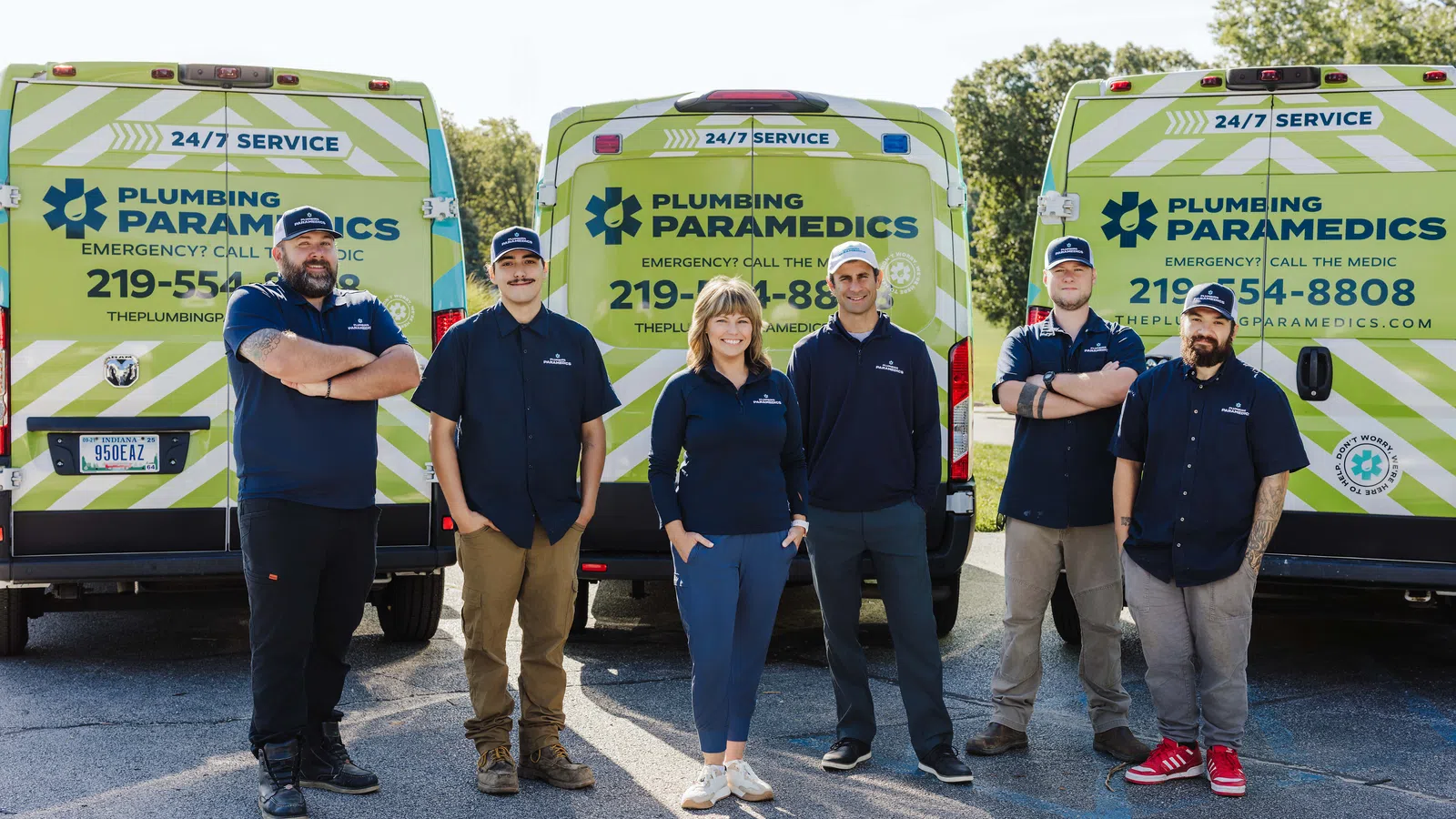
We are not a call center or a faraway corporation. Plumbing Paramedics is locally owned and operated by Matt and Michelle Robertson, who became franchisees in their hometown after their own positive experience with the brand. Michelle handles calls and scheduling, Matt oversees the work in the field, and the whole team is built around high integrity and finding the best solution for each customer.
When you call us for water softener services, you can count on:
- Licensed and insured plumbers who are experienced and trained
- No-pressure sales, so you only get what fits your home and budget
- Upfront pricing, so you know what to expect before work begins
- Financing options through Synchrony, so you can buy now and pay over time
- A customer satisfaction guarantee: if you are not satisfied, we will make it right
- 24/7 availability for plumbing emergencies
Schedule Water Softener Services Today
Hard water will not fix itself, and every month it goes untreated is another month of scale building up in your pipes and appliances. Let the licensed, locally owned team at Plumbing Paramedics help you choose and install the right water softener for your home, with upfront pricing and no pressure.
Call us at 219-881-8333 or request service online, and a member of our team will reach out to confirm your appointment.
Water Softener FAQs
Q
Is a water softener worth it in Northwest Indiana?
For many homes, yes. Hard water is common in Indiana, and the scale it leaves behind can shorten the life of water heaters and appliances, reduce water flow, and make cleaning harder. A water softener addresses the problem at the point where water enters your home, protecting everything downstream.
Q
How long does a water softener last?
Many water softeners last roughly 10 to 15 years, though the actual lifespan depends on the quality of the unit, how hard your water is, how much water your household uses, and how well the system is maintained.
Q
Does a water softener need a drain?
Yes. During regeneration, a water softener flushes mineral-rich rinse water out of the system, so it needs access to a drain. Most units also need an electrical outlet. Our plumbers account for both when choosing an installation location.
Q
Can a plumber install a water softener?
Yes. Because a water softener ties into your main water line and drain, a licensed plumber is well suited for the job. The plumbers at Plumbing Paramedics install water softeners and water treatment systems.
Q
Will a water softener help my water heater?
Soft water reduces the scale that collects inside water heaters, which can affect efficiency and contribute to premature wear. Protecting your water heater is one of the most common reasons homeowners choose to install a softener.


